

MENU No. 15
How about we do something a bit out of the ordinary tonight?
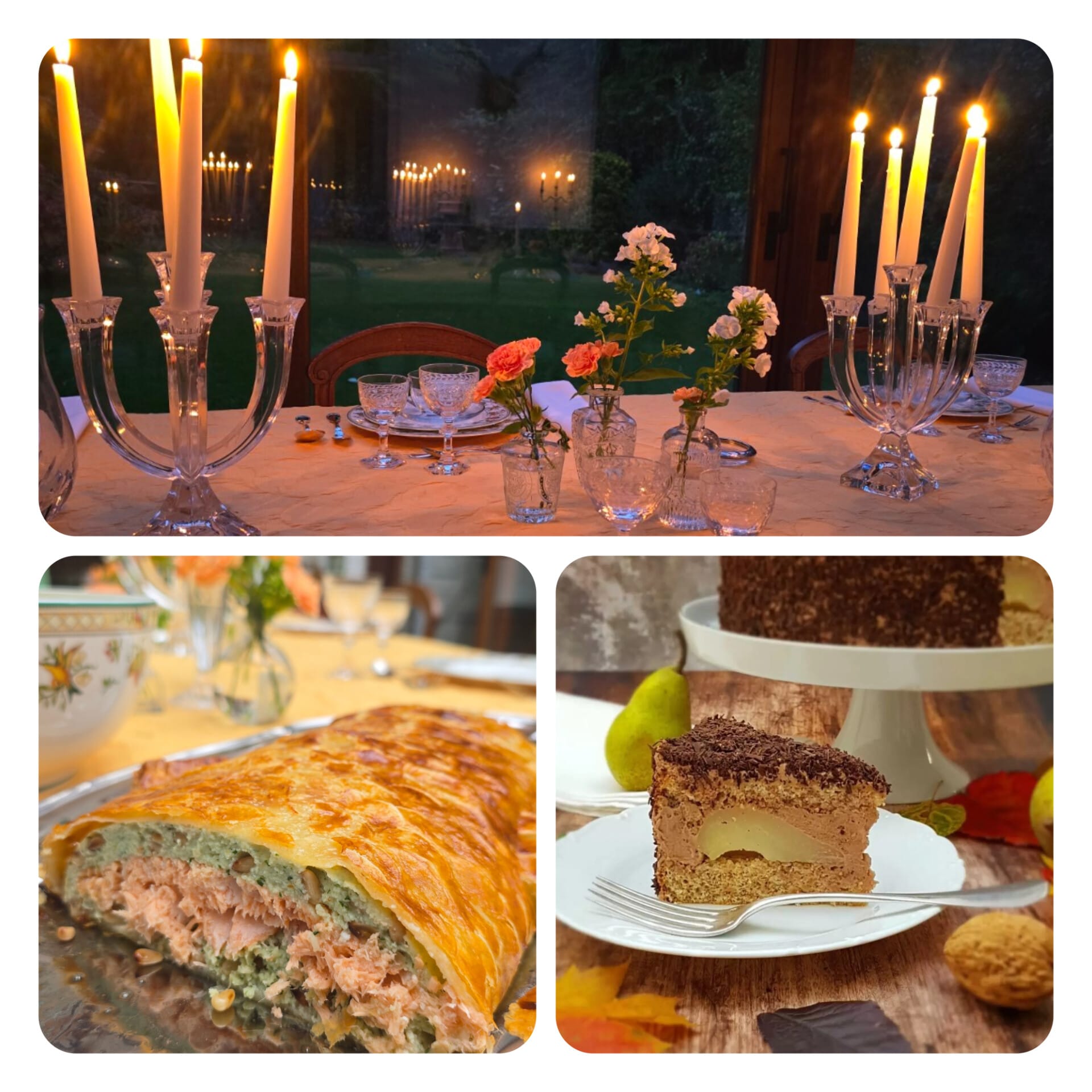
Entertaining, laying a lovely table, serving something that really makes an impression…
A complete menu, including the recipes, the shopping list and my plan of action.
Almost everything is prepared in advance.
Your guests are seated.
You too.
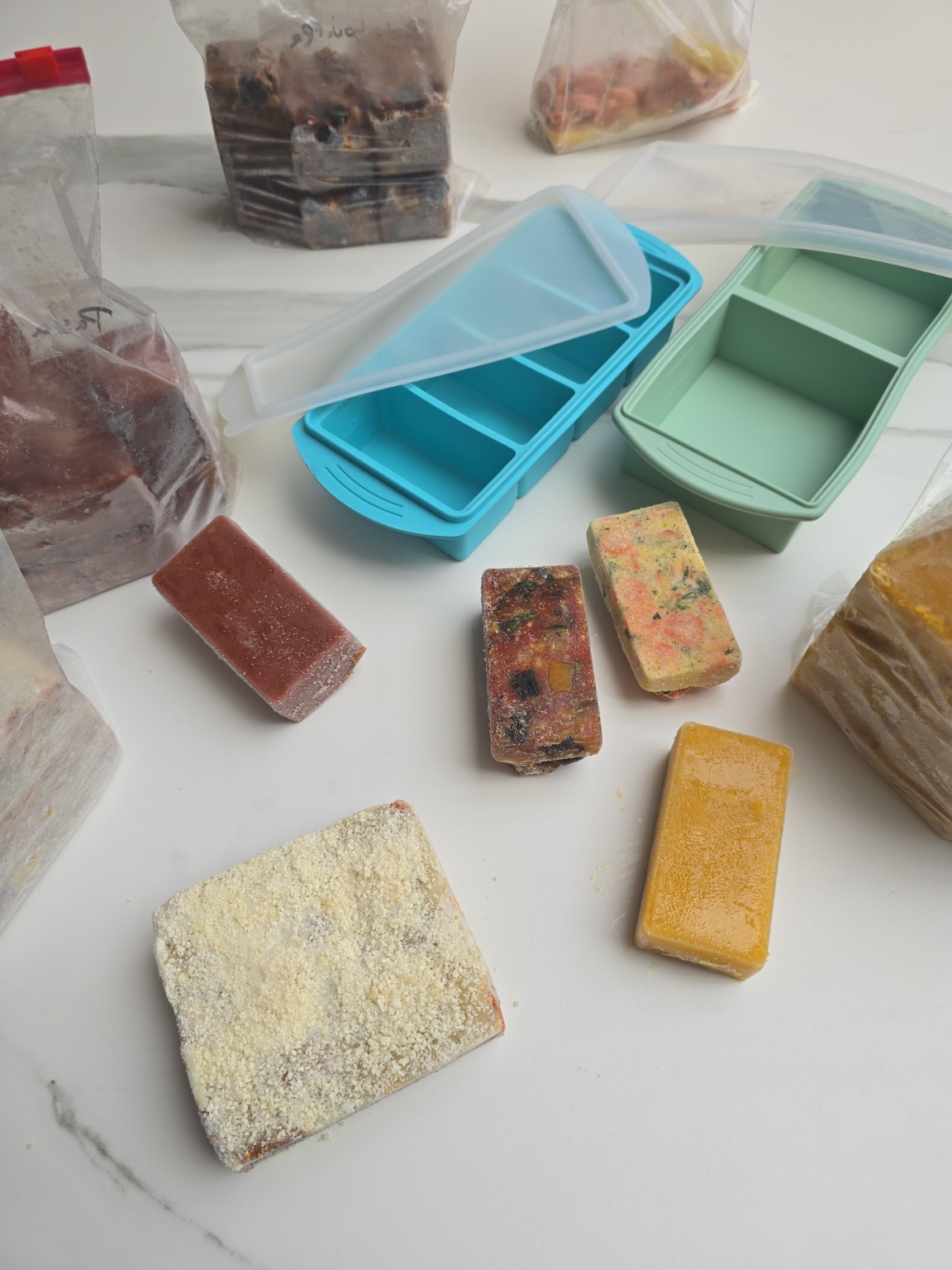
My Freezer Blocks system: how I organise my freezer
Description
For some time now, many of you have been asking me questions when I show you my Freezer Blocks : What exactly is it? What sizes do I use? What do I freeze in it? And, above all, what is it actually for?
The principle is very simple: instead of freezing my mixtures in a whole host of containers that then sit unused for weeks on end, I pour them into silicone moulds of various sizes.
Once the contents are completely frozen, I remove the blocks from the moulds and group them by recipe into labelled freezer bags.
The moulds are immediately available for other uses, and in the freezer, the blocks are much easier to store and stack.
But what I like most of all about this system isn’t just the space-saving aspect.
It is the freedom he gives me in my day-to-day life.
Ready meals… and Pick & Mix
I use my Freezer Blocks in two ways.
Some preparations are proper, full meals. Whether it’s a lasagne, a vegetarian lasagne, a parmigiana or even a portion of meatloaf with mashed potatoes, roasted vegetables and gravy: in that case, I just take out a block and my meal is practically sorted.
But I also freeze the different components of a meal separately.
And that’s where what I call my system comes in Pick & Mix.
A tub of ratatouille can be served with meatballs one day and with chicken another. A tub of tomato sauce can be used with pasta or gnocchi. A small tub of chicken stock can be added to a dish that needs it.
So I don’t have to decide, on the day I’m cooking, what we’ll be eating together several weeks later.
Some portions are already complete meals in themselves. Others are ingredients that I can combine depending on what I’ve got in the fridge, how many people are coming over, or simply what we fancy that day.
And at my place, both systems coexist in the same freezer.
It’s particularly handy in a household where not everyone necessarily has the same timetable.
Does my husband tell me in the morning that he’s off to the office? I can just take out a few meatballs and a block of ratatouille: his lunch is sorted. Does someone come home from university feeling peckish when I hadn’t planned an extra meal? Sometimes all I have to do is open the freezer and choose.
At other times, I don’t even need to go for the ‘Pick & Mix’ option: I just have a portion of lasagne or another complete meal.
So my freezer means I can either improvise or not have to improvise at all.
Where can I find mussels?
A lot of you ask me this question.
All you have to do is search «freezer blocks» or «freezer block moulds» online. There are several brands, shapes and sizes available.
I don’t think any particular brand is essential: what matters most is choosing the sizes that suit your habits.
Personally, I only use two sizes of moulds :
Ingredients
Instructions
-
Cool: Allow the mixture to cool completely before freezing it.
-
Portioning: Select the desired quantity – 125, 250 or 500 ml – and fill the corresponding compartments.
-
Freeze: Close the moulds and place them flat in the freezer for about 12 hours, until the blocks are completely frozen.
-
Turn out: Remove the blocks from the mould once they are completely set.
-
Ranger: Place the blocks from the same batch into a freezer bag.
-
Tag: Label each bag with its contents and the date, then place it back in the freezer straight away.
-
Reusing the moulds: The moulds are used to shape the portions, not to store them. Once the blocks have been removed from the moulds, they are therefore immediately ready for use in a new recipe.
-
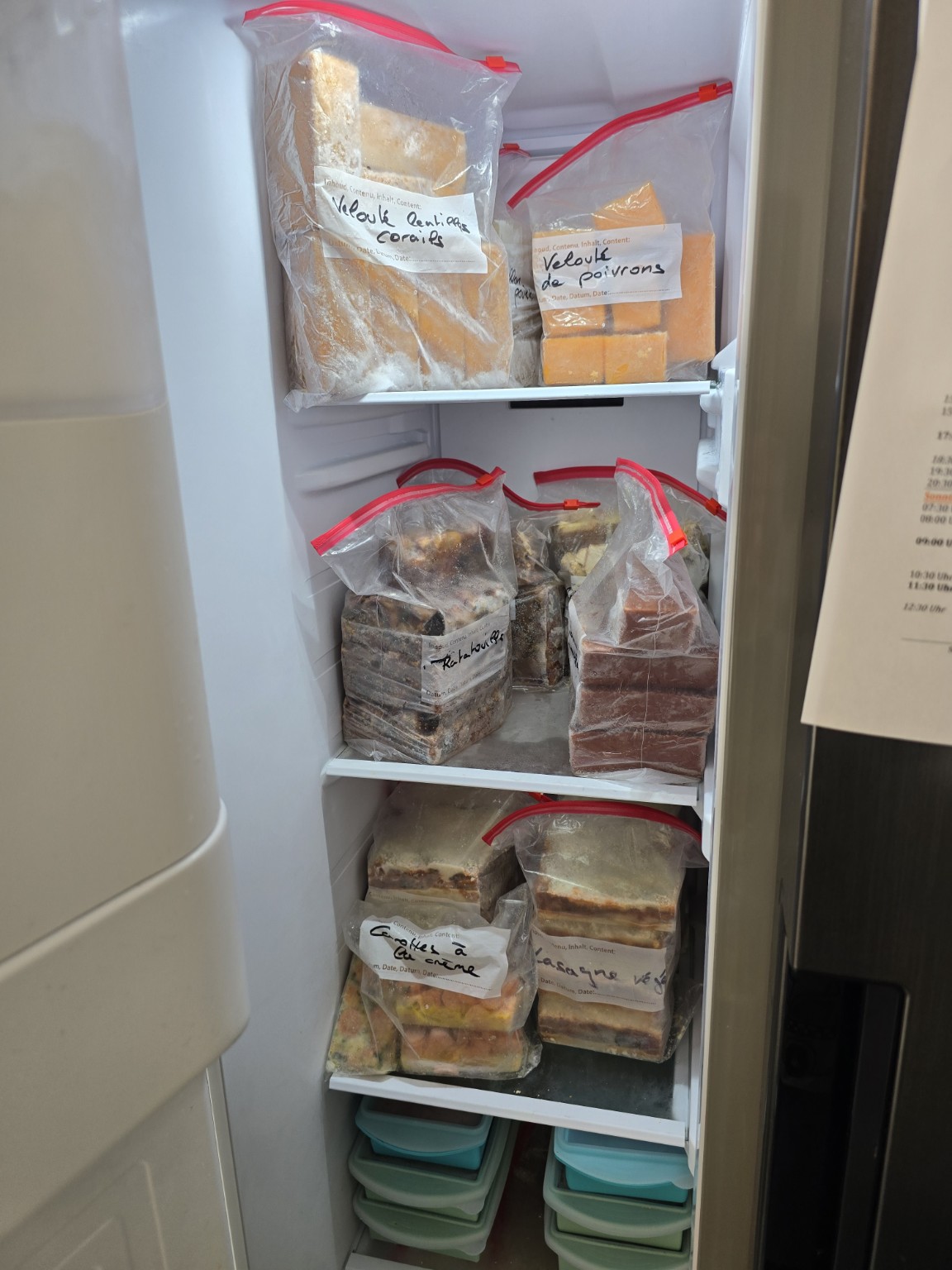 This is what part of my freezer looks like: once frozen, the blocks are removed from the moulds, grouped by recipe into bags and labelled. The moulds are then ready for the next batch.
-
How do I defrost my Freezer Blocks?
- This is a question I hadn’t thought to raise at first, and yet it is an important one. A 500 ml block that is completely frozen will obviously take some time to defrost and heat through.
- In practice, I use two methods, depending on how organised I am that day
- When I plan ahead, I simply take out the number of blocks I need the day before and leave them to defrost slowly in the fridge overnight. The next day, all I have to do is reheat the mixture as normal.
- And when I haven’t planned anything in advance — which does happen! — I use the microwave: first on the defrost setting, then I reheat the dish as normal.
-
For oven-baked dishes, such as my lasagne, I take a different approach. I place the block in an ovenproof dish, preferably one that’s roughly the same size as the block, so that the sauce stays close to the lasagne sheets whilst cooking. I defrost them in the fridge overnight, or from the morning if I’m making them for the evening, before putting them in the oven.
-
That’s also why I particularly appreciate the different sizes: I can take out just what I need, whether it’s a small 125 ml pack, a 250 ml pack or a full 500 ml portion, rather than having to defrost a large quantity.
As always, defrosted food should be kept in the fridge and eaten as soon as possible.
Note
125, 250 or 500 ml: which size should you choose?
At first, these different capacities might seem a bit arbitrary. In practice, I find that they cover almost all my needs.
And let me make it quite clear ml, not grams : Depending on what you’re freezing, 250 ml obviously doesn’t always equate to 250 g.
Here’s how I use them.
125 ml: small amounts that make all the difference
It’s probably not the format that springs to mind straight away, and yet it’s extremely practical.
I mainly use it for:
- sauces; ;
- cooking juices; ;
- the funds; ;
- chicken stock; ;
- small side dishes; ;
- vegetables in a sauce, such as my carrots in cream; ;
- all those small amounts where you don’t need a whole large container.
A 125 ml block allows you to add just the right amount to a meal without having to defrost a large quantity.
It’s also a brilliant way to use up small leftovers. Rather than throwing away a bit of sauce because it’s «barely anything», it becomes a small block that could come in very handy another time.
250 ml: my most versatile size
That’s probably the size I use most often.
It is ideal for:
- pasta sauces; ;
- ratatouille and other cooked vegetables; ;
- side dishes; ;
- cream soups; ;
- broths; ;
- the various elements that I would like to be able to combine later on.
For the creamy, for example, I deliberately freeze it in 250 ml blocks.
Why not freeze them straight away in 500 ml portions?
Because a block of 250 ml can serve as a starter. If, on the other hand, I want a proper meal, I simply have two blocks, i.e. 500 ml.
So I don’t have to decide, whilst I’m cooking, how I’d like to eat this soup several weeks later.
That is exactly the spirit of the system.
500 ml: often a full meal
The 500 ml size is particularly useful when I want to freeze something a proper meal portion.
For example, I use it to freeze my meatloaf with mashed potatoes, roasted vegetables and gravy. Everything’s already in the same block: I just need to pull it out when I need it.
It’s also the format I use for my individual lasagne portions.
Parmigiana also lends itself very well to this method.
And of course, you can also make a 500 ml portion by combining two small 250 ml blocks, as I do when making my cream soups.
That’s the whole point of having several formats: I can freeze a whole meal or prepare just the amount I need.
My little guide to choosing the right size
If I had to sum up my system in three words, they would be:
125 ml → top up
Sauces, gravies, stocks, small portions and small side dishes.
250 ml → enter
Creamy soups as starters, vegetables, ratatouille, sauces, side dishes and various components of a meal.
500 ml → eat
A generous portion of soup or, where the recipe allows, a complete meal in itself.
This isn’t, of course, a hard and fast rule. It’s simply the one that works best in my kitchen.
What’s currently in my freezer
To give you a much clearer idea than any theoretical list could, here’s what I’ve got at home as I write this article:
Cream of red lentil soup, light carrot soup, cream of pepper soup, green asparagus soup, chicken stock, ratatouille, carrots in cream sauce, chicken in gravy, chicken blanquette, vegetarian Bolognese sauce with 6 vegetables, tomato sauce for pasta, meatloaf with mashed potatoes, roasted vegetables and gravy, classic lasagne, vegetarian lasagne with vegetables and parmigiana.
And, of course, not everything has to be made in moulds.
My freezer also contains some dishes that freeze very well just as they are: chicken meatballs, mushroom pasties,chicken briouatsand, falafel, Arancini, ...
The aim isn’t to turn everything I cook into little rectangles!
The Freezer Block is simply another way of organising my freezer, but it does offer a real benefit.
How I go about it
First, I leave my mixture to cool, then I fill the compartments of my moulds with the desired amount: 125, 250 or 500 ml, depending on what I’m freezing.
I close the moulds and place them flat in the freezer.
You have to take into account about 12 hours for the blocks to freeze completely. In practice, I often prepare them in the evening and turn them out the next day. I can also fill my moulds in the morning and turn them out in the evening.
Once the blocks are completely set, I take them out of the moulds and sort them by batch into freezer bags.
On each bag, I write the content and the date.
This is important: a few weeks later, a carrot soup can look surprisingly similar to another orange-coloured dish!
I try to keep batches of the same dish together in the same bag wherever possible. That way, my freezer stays organised and I can quickly see what I’ve got left.
And above all, I don’t leave the portions in their moulds.
That is precisely what makes the system work: just a few moulds are enough to gradually build up a whole stock. The moulds are used to make the blocks, not to store them for weeks on end.
The special case of lasagne
When it comes to lasagne, there’s one small but important difference.
I currently have both some classic lasagne than just the vegetarian lasagne with vegetables in individual portions.
I assemble my lasagne straight into the 500 ml containers and freeze them raw, before cooking.
Once the block is completely frozen, I take it out of the mould and can store it just like the others.
But you need to take care when defrosting and cooking it.
I place the lasagne in an ovenproof dish of the appropriate size as close as possible to those of the block. I wouldn’t place a small individual portion of lasagne in the middle of a very large dish.
Why?
This is because, as they defrost, the sauces become liquid again. If the dish is far too big, they may run out around the lasagne instead of staying between the different layers.
Gold The lasagne sheets need this moisture to cook properly.
It’s a small detail, but it makes all the difference.
And of course, before putting a silicone mould in the oven, always check the manufacturer’s instructions: The moulds I use for my Freezer Blocks are designed for freezing, not for baking in the oven.
A stock that is being built up bit by bit
There’s absolutely no need to spend a whole day filling up your freezer.
I don’t prepare all these things specifically to make Freezer Blocks.
My stock builds up as I cook.
Am I making a cream soup? I’ll make a bit extra and pop a few portions in the freezer.
Do I have any ratatouille left? I’ll divide it into portions.
Am I making a large batch of tomato sauce? Some of it is eaten and the rest is frozen.
Have I made a lasagne? I can make the most of the work I’ve already done to prepare one or two individual portions for the freezer at the same time.
Bit by bit, without any proper «meal prep» sessions, we end up with a very varied selection.
A freezer that opens up a world of possibilities for me
That’s actually what I like most about this organisation.
My freezer contains complete meals, individual portions and items that can be combined.
Some days, I just take out a single block and the meal is sorted.
On other days, I take two or three out and make something up.
A lasagne for those days when I don’t want to think about anything.
One portion of cream of [vegetable] soup for a starter, two for lunch.
Ratatouille with meatballs today, and the same ratatouille with chicken another time.
A small portion of sauce, just when I need it.
A meal my husband can take to work, or something ready and waiting when a child comes home from university feeling peckish.
I don’t necessarily want to decide today what we’ll be eating in three weeks’ time. I’d rather keep my options open.
Ready-made whenever it suits me, some Pick & Mix whenever I feel like it.
And that’s probably the best way to sum up why my Freezer Blocks have taken up so much space… in my organisation, whilst taking up far less space in my freezer.
