

Golden, crispy on the outside and tender on the inside, Viennese schnitzel is one of the great classics of Austrian cuisine. Here at home, it’s always a huge hit, particularly with my in-laws, for whom I prepare a big lunch once a year.
Traditionally, a proper Wiener Schnitzel is made with veal. Personally, I often prefer to use pork, as I find it juicier. It’s also a more economical option, which is particularly useful when you’re entertaining a large group.
In Austria, schnitzels are traditionally pan-fried in a generous amount of fat. But when I have to make around thirty of them, as I did at our last family lunch, I much prefer to use a deep-fat fryer. The temperature stays constant and it’s much easier to control the cooking process.
 3. Dip each cutlet first in the flour, shaking off any excess, then in the beaten eggs and finally in the breadcrumbs. Make sure the entire surface is well coated, without pressing the breadcrumb coating down too firmly, so that it can puff up slightly during cooking.
My tips for stress-free entertaining
Prepare the schnitzels the day before
When I’m having a lot of guests, I always prepare the cutlets the day before.
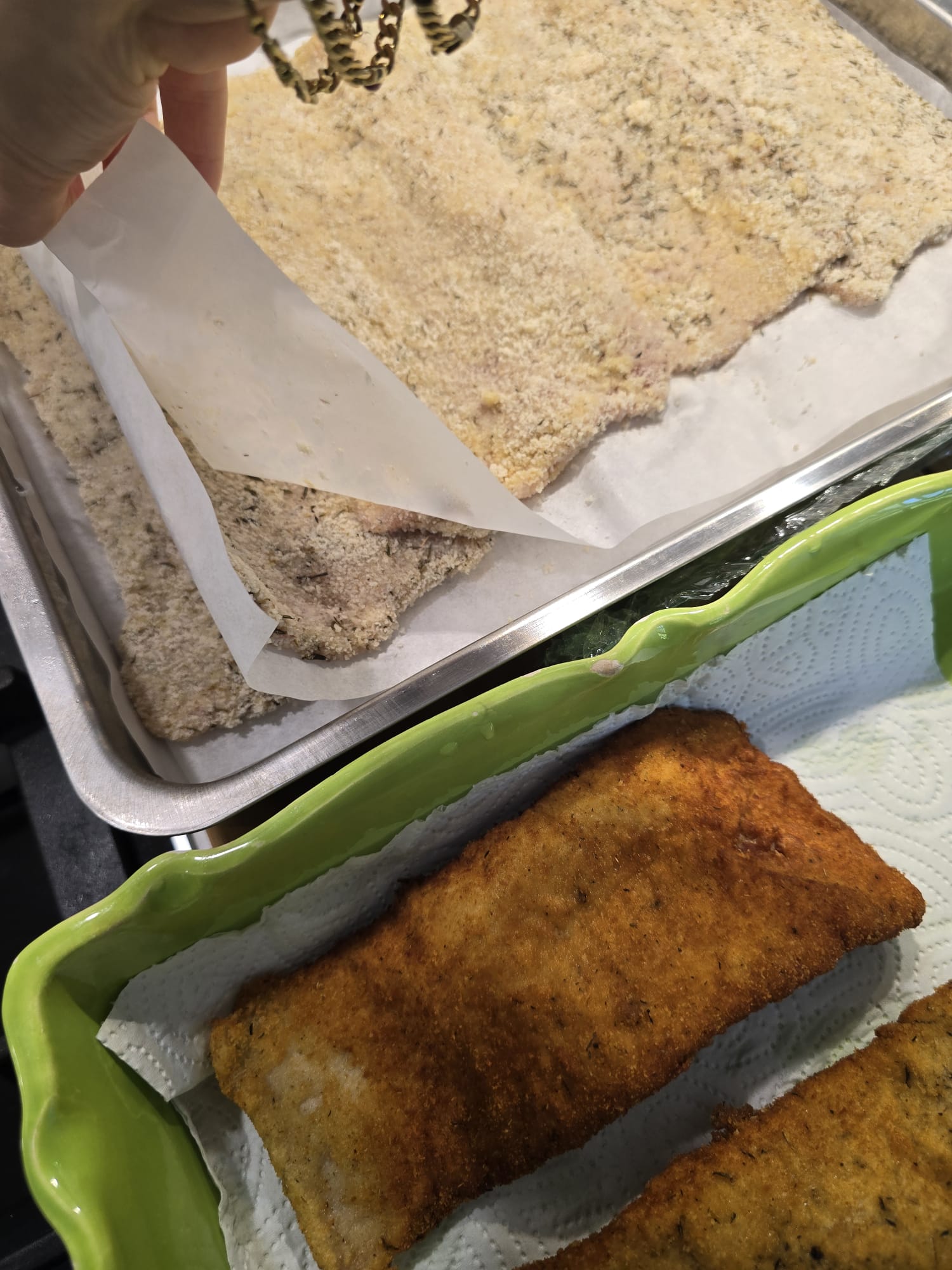
Once they’ve been breaded, I arrange them in a large dish in a single layer, then cover them with a sheet of baking paper before adding another layer of cutlets. I carry on like this until all the cutlets have been breaded.
Baking paper stops them from sticking to one another and makes it easy to remove them the next day.
I then carefully cover the dish with cling film and keep it in the fridge until I’m ready to cook it.
Cook the cutlets once the guests have arrived
I never cook my schnitzels several hours in advance. They might dry out and lose their crispiness.
So I start cooking once the guests have already arrived.
For four or six people, it’s relatively quick. However, if you’re making around thirty schnitzels, you’ll need to allow more time!
That is precisely why I prefer the deep-fat fryer to a frying pan. The temperature is more consistent and I don’t have to keep a constant eye on the oil to stop it from burning. For large gatherings, two deep-fat fryers are ideal.
Keep the schnitzels warm
As they cook, I place the schnitzels in a large metal dish lined with kitchen paper.
I arrange them in a single layer, then add some kitchen paper before laying out the next ones. This helps to absorb some of the excess fat.
I then place the dish in an oven preheated to 90 °C to keep them warm whilst I finish the other batches.
This method works really well for me and means I can serve everyone at the same time, without having to stay in the kitchen during the meal.
However, you should avoid keeping the food warm for longer than necessary, in order to best preserve the tenderness of the meat and the crispiness of the breadcrumb coating.
What should you serve with Wiener Schnitzel?
In Austria, they are often served with potato salad, cucumber salad and tomato salad, lemon wedges and, sometimes, lingonberry jam.
For our last family lunch, I made an Austrian potato salad garnished with thin slices of cucumber and fresh chives.
And to round off this meal with an Austrian flavour, what could be better than a genuine Sachertorte served with whipped cream?
One last piece of advice
Wiener Schnitzel is a relatively inexpensive, hearty dish that almost everyone enjoys. It takes a bit of effort to make, but much of it can be prepared in advance.
For a family of four, this is a perfectly affordable meal, even on a weekday. For a large family gathering, you just need to plan ahead and allow enough time for cooking.
And if you have a few schnitzels left over, don’t throw them away! They’re delicious cold the next day, tucked into a bread roll with a nice tartar sauce.